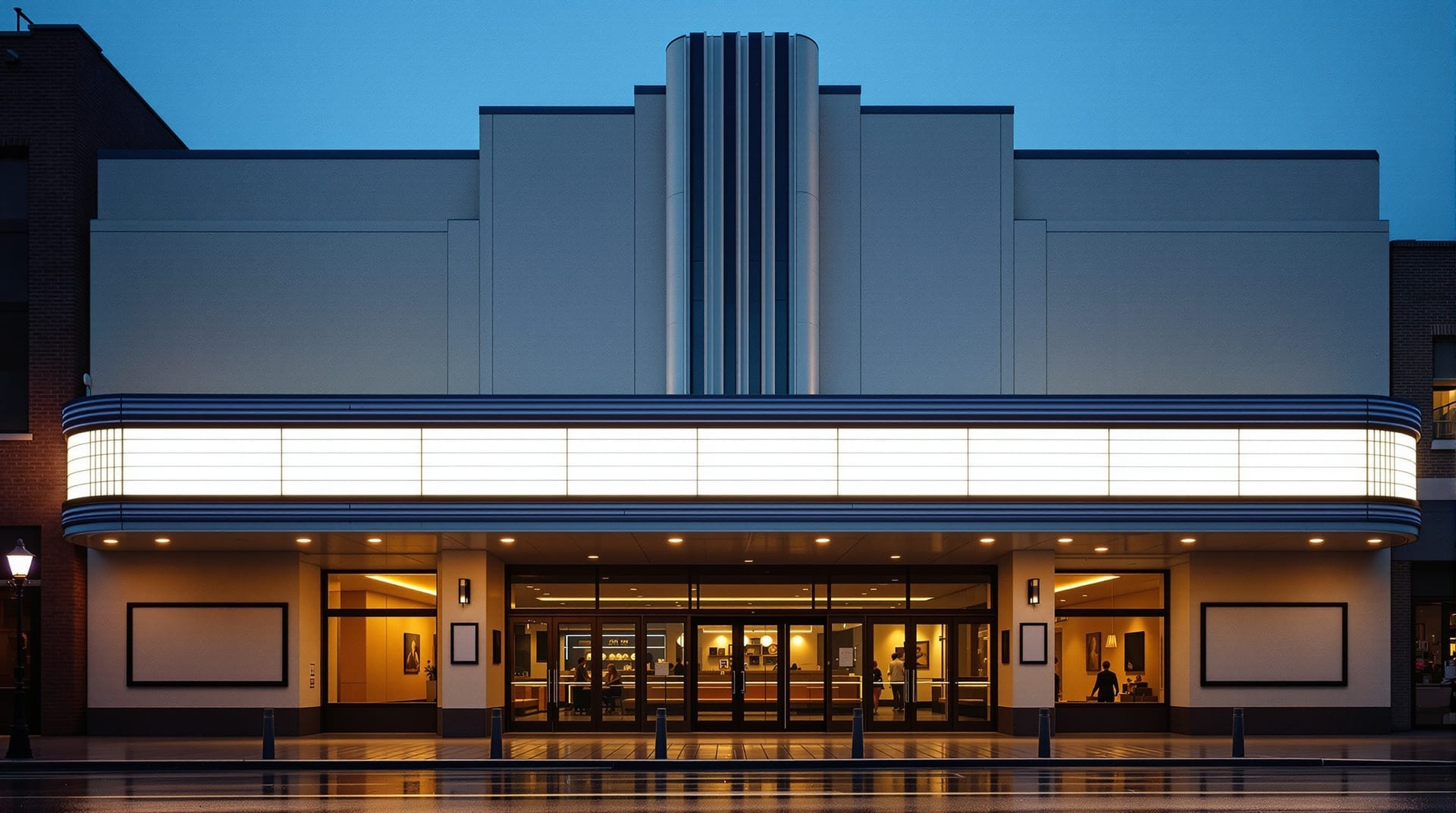
The eastern blocks of H Street NE have a second name. Locals, listings and estate agents all call the stretch the Atlas District, after a cinema that sat shuttered on the block for the better part of thirty years before being restored as a performing-arts centre. That single building is the reason the eastern end of the corridor has a distinct identity at all, and understanding how it happened explains a good deal about how the whole corridor turned.
The cinema
The building at the centre of the story is a 1930s neighbourhood movie house — a modest, handsome, streamlined picture palace of the kind that once anchored commercial strips all over American cities. It closed as a cinema in the 1970s, spent decades in intermittent and marginal use, and by the 1990s was derelict. It was also, crucially, still standing, still structurally sound, and still visibly a theatre.
Its restoration into a multi-space performing-arts centre — several theatres, rehearsal and dance studios, and resident companies — took most of a decade to fund and build, and it reopened in the mid-2000s. That reopening did something no amount of retail incentive had managed: it gave people from outside the neighbourhood a specific reason to travel to the eastern end of H Street after dark, several nights a week, and to be there in numbers.
Why one venue mattered so much
Commercial-district recovery has a chicken-and-egg problem. Restaurants and bars will not open where there is no evening footfall, and there is no evening footfall until something draws people in the evening. A performing-arts venue solves this from the demand side: it delivers a few hundred people to a specific block at a predictable time, and those people want to eat before and drink after.
That is precisely what happened. Within a few years of the theatre reopening, the eastern blocks had acquired a dense concentration of bars, restaurants and small music venues, several of them in buildings that had been vacant for decades. A small playhouse a short way along the corridor had already been running productions for several years and had proved the audience existed; an independent arts venue on the same stretch had been staging irregular events. The theatre turned three isolated efforts into a district.
The formal designation
Alongside the physical restoration the corridor received an arts and entertainment overlay designation for its eastern end — the same instrument used elsewhere in the region to concentrate cultural uses in a defined area, usually with a mix of tax incentives, permitted-use changes and marketing support. The designation gave the name official standing and gave the corridor’s promoters something concrete to point at. The DC Commission on the Arts and Humanities supports arts activity across the District, and the National Endowment for the Arts publishes research on exactly this kind of arts-led district development.
By 2007 the festival was explicitly organised around that designation. The programme that year put two performing-arts stages alongside the music, and the organisers said openly that the point was to focus attention on the developing arts district at the eastern end. See the 2007 retrospective.
What the district is now
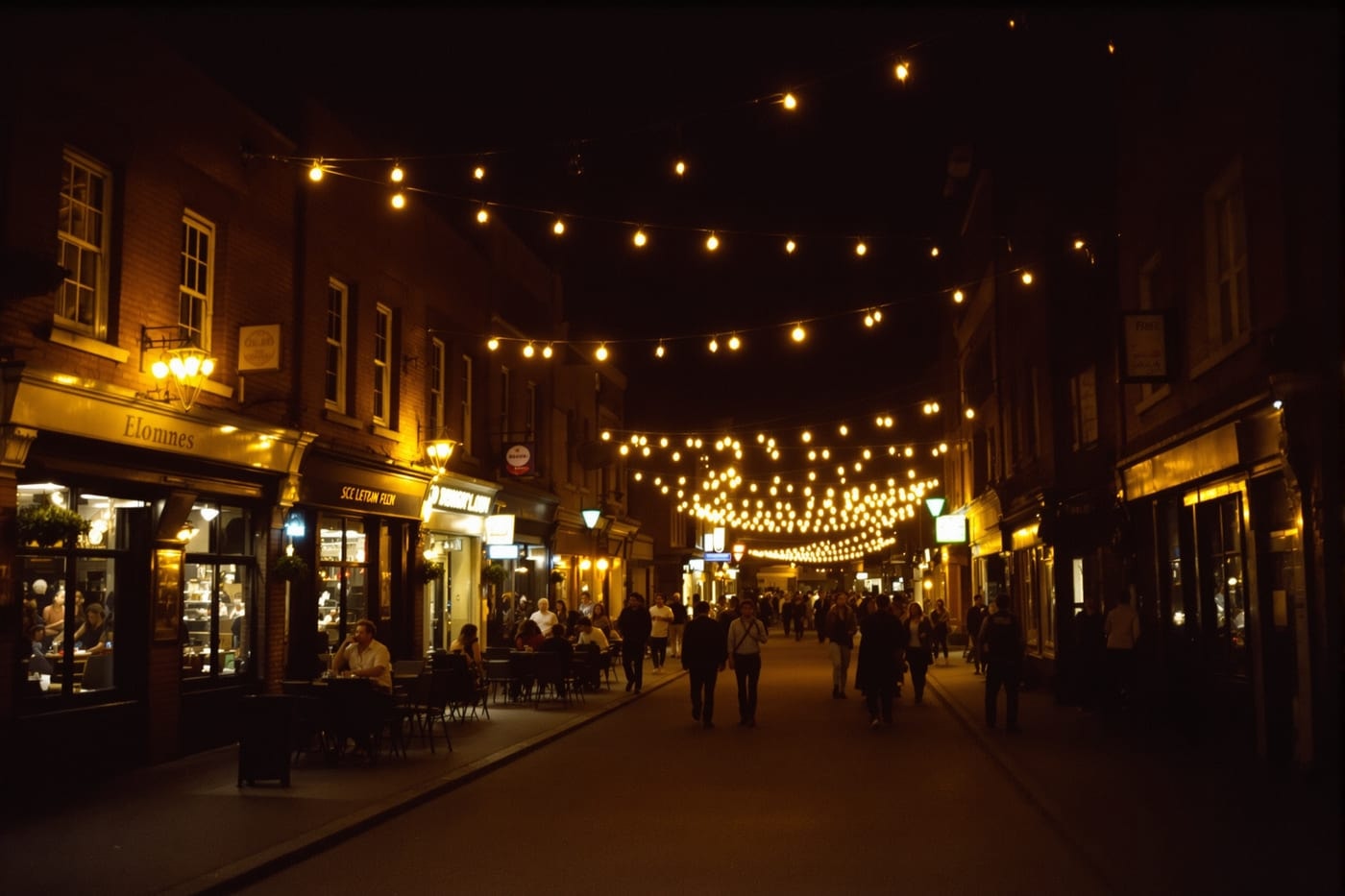
The eastern blocks today carry the corridor’s heaviest night-time activity: theatre, live music in several rooms of varying size, comedy, bars of every register from dive to cocktail, and a dense concentration of restaurants. Painted side walls and murals are more common here than elsewhere on the corridor — see murals and public art. It is loud on weekend nights and quiet on weekday afternoons.
The district also carries the sharpest version of the corridor’s central argument. An arts overlay is a development tool as much as a cultural one, and the concentration of licensed premises it produced has been a live source of friction with the residential blocks immediately behind. Whether an arts district that succeeds at drawing a citywide crowd is still serving the neighbourhood it sits in is a genuinely open question here, as it is in every comparable district in the country.
Seeing it properly
The district is best understood on two visits: once in daylight, when the architecture is legible and you can see how much of the fabric is original, and once after dark, when the reason it works is obvious. Both are on the same four or five blocks. Our visiting guide covers the practicalities, and walking the corridor puts the district in the context of the whole street.
Conclusion
The Atlas District is the clearest available demonstration that a single restored building, used well, can change the trajectory of a commercial street. It is also a demonstration that the change will not be evenly welcome. Both lessons are visible on the same four blocks, which is what makes the eastern end of H Street worth the walk.