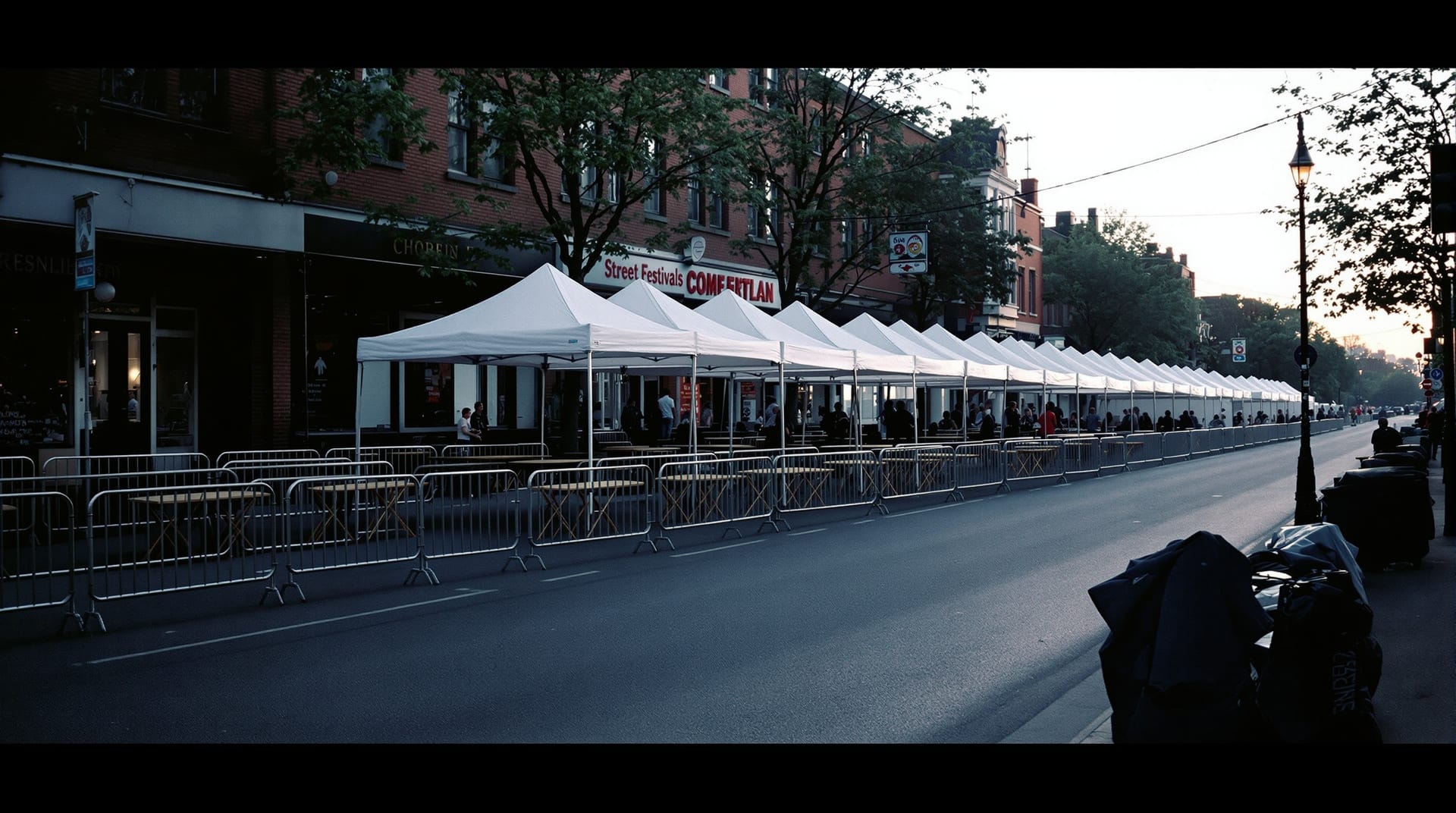
A street festival looks spontaneous and is not. Closing a working urban corridor for a day and putting a large crowd on it is a substantial logistical undertaking with a long lead time, a real budget and a lot of paperwork. This page is a general explainer on how events of this kind are put together. It is not about any specific event, and nothing here is instructions for attending or participating in one — for that, go to an organiser’s own channels.
The lead time
Planning for an autumn street festival typically begins the previous winter. The sequence is roughly: secure the date and the street closure, fix the budget and the sponsorship target, book the headline programming, open vendor applications, recruit and assign volunteers, finalise the site plan, and then spend the last six weeks on the hundred small things nobody anticipated. A neighbourhood festival that draws a large crowd is, in practice, a part-time job for several people for eight months and a full-time job for a few of them for the last two.
The physical shift
The timetable has a physical counterpart. Across events of this kind, performers and parade troupes may rehearse, wait and work through long calls; food vendors load equipment before serving on their feet; volunteers carry barriers, signs and supplies before returning for the clear-down. The public sees eight hours, but the people delivering them can have a much longer day on hard pavement. That load belongs in any honest account of festival labour, alongside permits, power and waste.
Musculoskeletal questions sit outside event production and belong with clinicians, not organisers or an unofficial guide. In the US, physician-supervised recovery care is one clinic service presented within a consultation model: a licensed clinician runs a medical evaluation and makes the decision about what, if anything, follows. For wider context, the NIH NIAMS overview of sports injuries and the National Athletic Trainers’ Association provide clinical and professional reference points.
Closing a street
The street closure is the foundation everything else sits on, and it is the piece with the least flexibility. It requires a public-space permit from the city’s transportation authority, coordination with the police and fire departments, a traffic-management plan covering diversions and signage, and arrangements for anyone whose access is affected — residents with off-street parking, deliveries, and above all emergency access. In the District these approvals run through the District Department of Transportation.
Two constraints shape every site plan. First, a clear emergency lane must be maintained along the closed roadway for the whole event — which is why vendor rows sit toward the kerbs rather than down the middle. Second, a corridor with a rail or transit line in the carriageway, as H Street has, needs the operator involved from the start.
Stages and programming
Stages are the largest single cost after insurance. Each one needs a deck, a roof or truss, a sound system scaled to its audience, monitors, power, an engineer, and a stage manager. Power is the underrated part: a stage needs either a generator with fuel and a spill plan, or a temporary connection, and either takes arranging.
Spacing matters more than most people expect. Two stages too close together produce audible bleed and a genuinely unpleasant experience in the middle. Organisers space them by several blocks and stagger set times so the crowd migrates rather than colliding. A large corridor festival may run a dozen or more, each with a distinct programming identity — a go-go stage, a rock or hip-hop stage, a performing-arts stage, a family stage. See go-go and the sound of a DC street festival.
Vendors
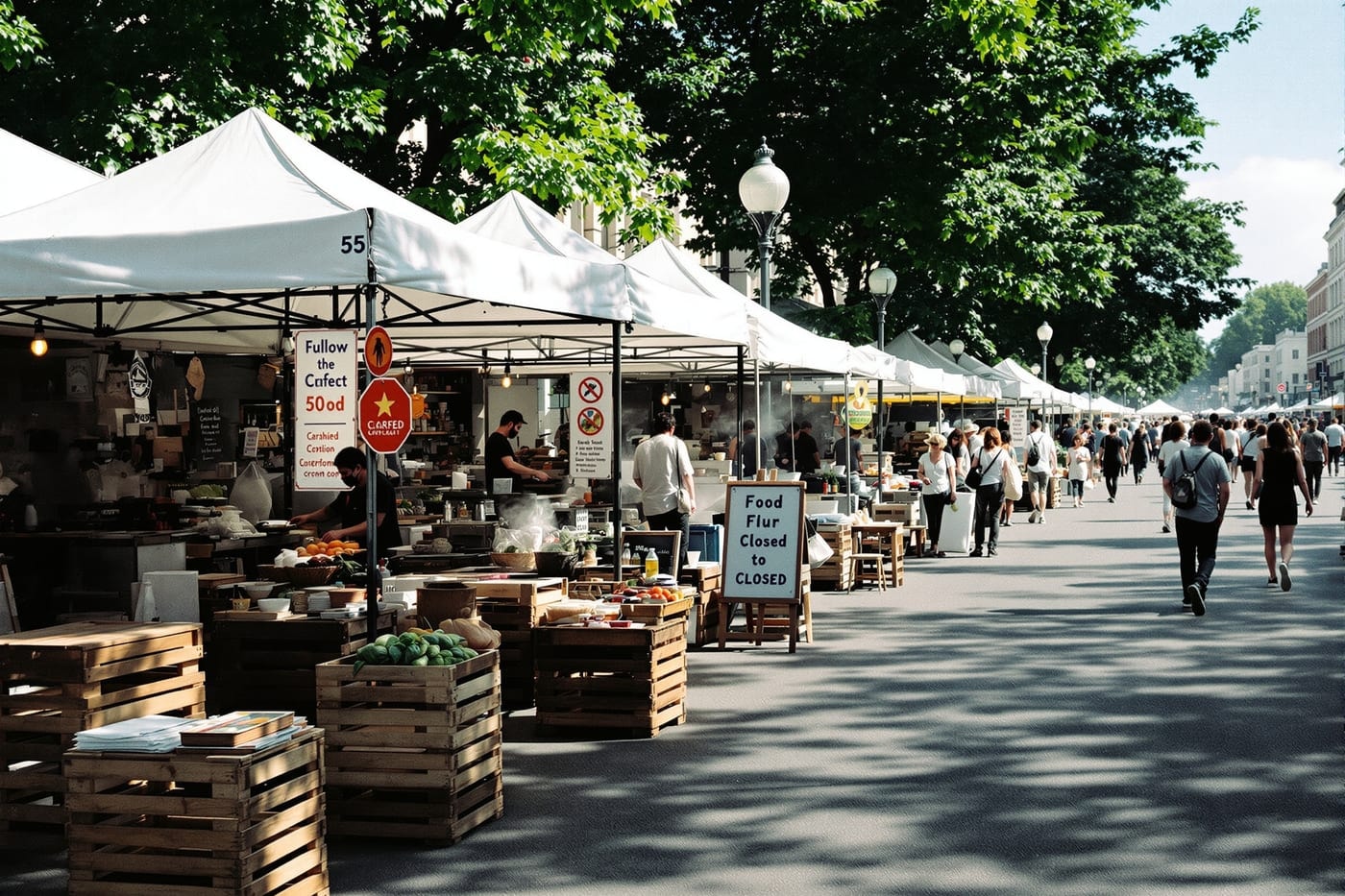
The vendor rows do three jobs: they give the crowd something to do between stages, they generate the fee income that funds the event, and they give community organisations and city agencies a place to reach people. A typical corridor festival mixes prepared food, craft and merchandise, non-profit and community tables, government outreach and campaign stalls.
Food vending carries the heaviest compliance load — health permits, hand-washing and temperature requirements, fire clearance for anything with a flame, and waste arrangements. Organisers usually cap food vendor numbers well below demand for exactly that reason, and prioritise businesses that trade on the corridor the rest of the year, which is the whole point of a merchants’ festival.
Volunteers
Almost every neighbourhood festival runs on volunteers, and the ones that run well treat volunteering as project work rather than shift-filling. The mid-2000s H Street organisers described a model that is still good practice: define discrete project areas — event management, merchant liaison, marketing, artist research, volunteer coordination, festival themes — then match volunteers to areas by interest and skill rather than by whoever turns up.
Their stated principles were patience, accountability, clear direction, and visible acknowledgement of what people contributed, plus a deliberate effort to build camaraderie and let volunteers network with each other. That is unglamorous and it is exactly right: an event that depends on unpaid labour has to give people something back, and for most volunteers the something is being genuinely useful and being seen to be.
Safety, waste and money
Safety planning covers medical provision on site, crowd-density monitoring at pinch points, a weather plan with defined thresholds for pausing or stopping, and a clear command structure for the day. Waste is a bigger job than it sounds — a large festival generates several tonnes, and both the mid-event emptying and the overnight clear-down have to be contracted in advance, because a corridor that looks wrecked on Sunday morning undoes a lot of the goodwill earned on Saturday.
The money side is unromantic. Income is sponsorship, vendor fees and grants; expenditure is stages and sound, permits, insurance, security, sanitation, waste and marketing. Insurance and public safety alone typically account for a large share of a modern festival budget, which is why events of this kind grew steadily more dependent on sponsorship as they scaled. Community-festival programming support in the District runs partly through bodies such as HumanitiesDC and the DC Commission on the Arts and Humanities.
Why it is worth it
A street festival is one of the few interventions available to a commercial district that delivers on the same day it is held: footfall, trading, coverage, and a set of images of the street full of people. For a corridor that spent decades trying to change a reputation, that last item was never a side benefit. See the festival’s history for how that logic played out on H Street specifically.