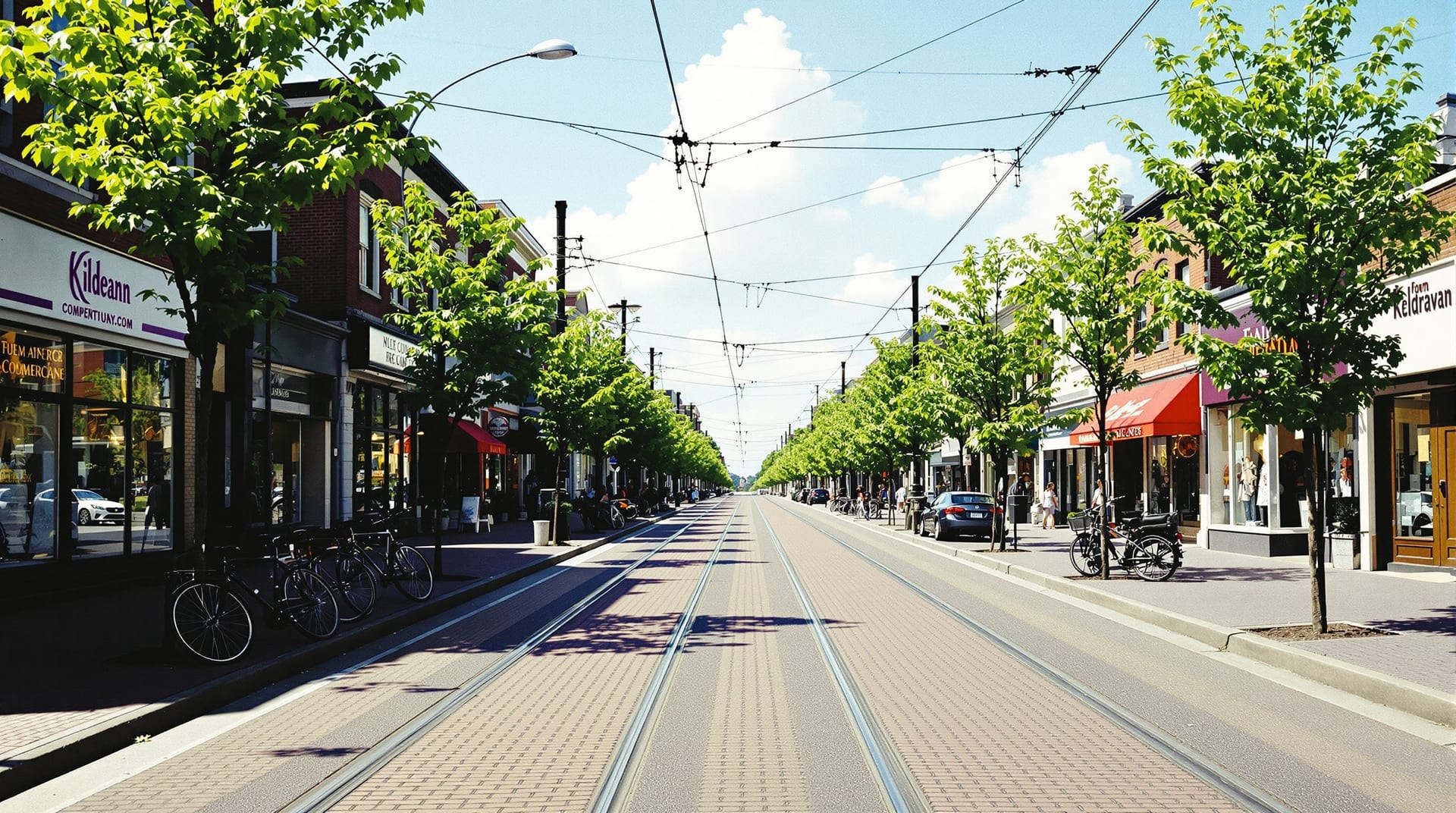
H Street NE is about a mile and a half end to end and takes an unhurried hour to walk one way. It is worth doing on foot rather than from a car or the streetcar, because the interest is almost entirely at ground level and in the upper facades, and because the character changes noticeably about every four blocks. This page describes the corridor as you actually encounter it.
The three zones
Planners divided the corridor into three functional zones in the 2000s, and the division has stuck because it describes something real. From west to east:
- The urban living zone — the western blocks, nearest the rail corridor and the main transit hub. Larger buildings, more residential density, more institutional and office uses. This end feels like an extension of downtown.
- The central retail zone — the middle blocks, and the corridor’s historic commercial heart. The most continuous run of pre-war storefronts, the tightest grain, and the greatest number of individual businesses per block.
- The arts and entertainment zone — the eastern blocks, known as the Atlas District. Theatres, music venues, bars and restaurants, and the corridor’s heaviest night-time activity. Covered separately on the Atlas District.
The festival footprint has historically sat over the central and eastern zones, which is where the street is narrowest, the storefronts densest and the crowd easiest to hold.
The west end and the rail cut
Start behind the main railway station. The corridor begins with an overpass carrying H Street above the rail approaches — a long, wide bridge that was completely rebuilt in the 2010s and that functions as the corridor’s front door. It is not a pleasant walk in itself, but it does something useful: it separates the corridor cleanly from downtown, so that H Street starts as its own place rather than trailing off from somewhere else.
Immediately east of the bridge the street settles into its working width — two traffic lanes, streetcar rails set into the asphalt, parking on both sides, and generous pavements from the streetscape reconstruction. The buildings here are a mix of newer mid-rise residential blocks and surviving older commercial structures.
The central blocks
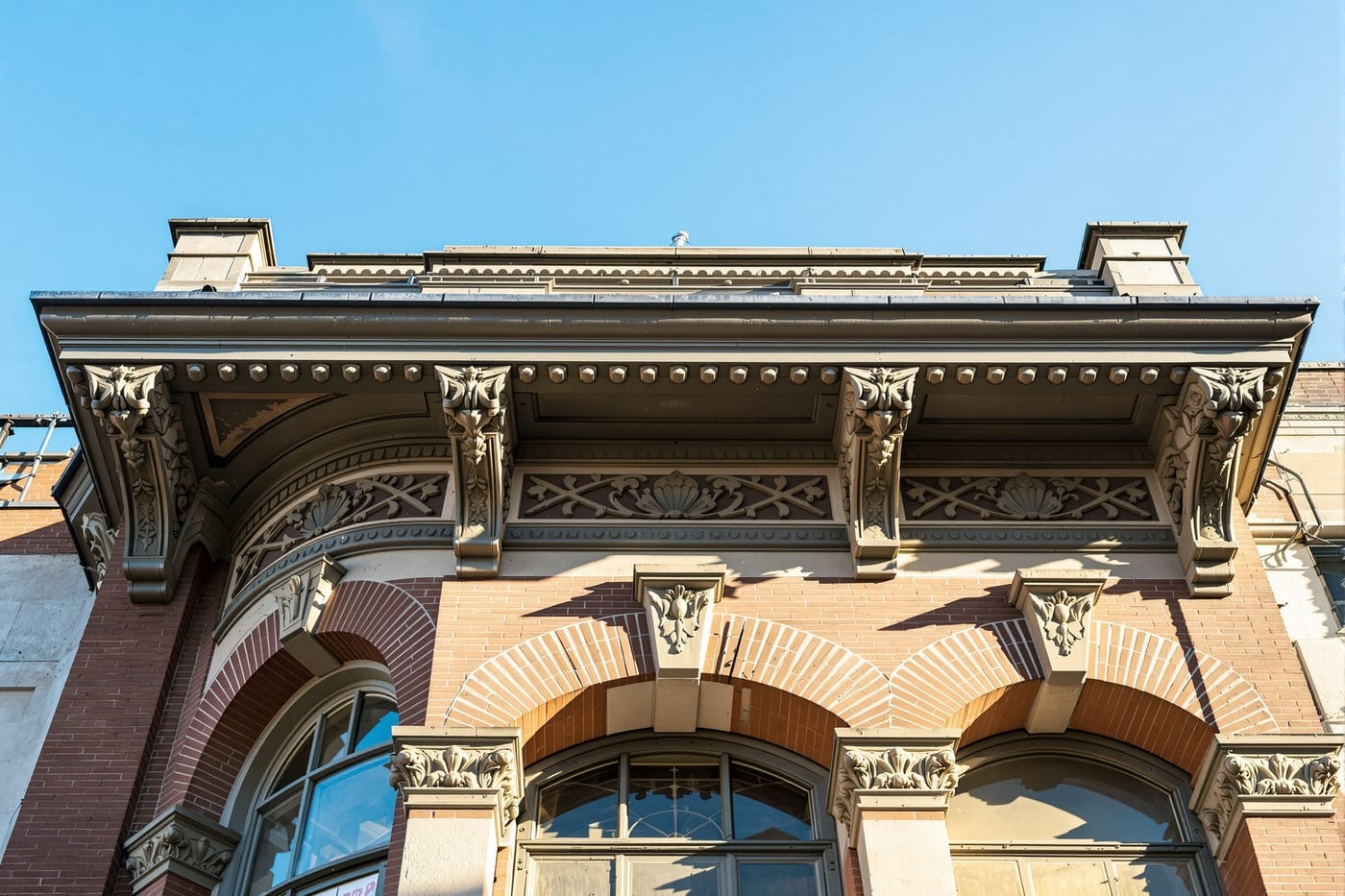
This is the stretch to slow down for. The building line is close to unbroken for several blocks: two- and three-storey commercial buildings, almost all of them from the first four decades of the twentieth century, sharing party walls, each with its shopfront at grade and one or two floors of usable space above.
Look up. The ground floors have been altered many times over — that is what ground floors do — but the upper facades are largely original and carry the corridor’s real architectural interest: pressed-metal and terracotta cornices, decorative brickwork, segmental and round-arched window heads, the occasional bay. Where a building is missing from the row, or where a plain windowless mid-century box interrupts it, you are usually looking at a site that burned in 1968 and was either cleared or crudely rebuilt. See 1968 and after for that history.
The buildings on this stretch are the reason the corridor has a designated historic character, and the District’s historic-preservation programme, run through the DC Office of Planning, holds the survey record for them.
The east end and the Starburst
Toward the eastern end the corridor changes register again: taller frontages, marquees, painted side walls, and a run of venues that comes alive after dark. It finishes at the Starburst — the intersection where H Street, Benning Road, Bladensburg Road, Florida Avenue and Maryland Avenue all converge in a rough asterisk. The junction is named for the public artwork installed at it, and it is one of the more genuinely confusing pieces of road geometry in the city.
Beyond the Starburst the street continues as Benning Road and the character changes completely. For the purposes of the corridor — and the festival — the Starburst is the eastern end.
The streetscape itself
The corridor was rebuilt from the kerb line in over several years in the late 2000s and early 2010s: new pavements, street trees, lighting, bus stops, and the rails and overhead wire for the streetcar. The reconstruction is why the walking surface is as good as it is, and it is also why almost every business on the street has a story about the years it was a building site. Read more on getting there.
Reading the side streets
Do not stay on H the whole time. The residential blocks immediately north and south are where the corridor’s context lives: dense rows of late-nineteenth and early-twentieth-century brick rowhouses, many with the pressed-metal cornices and turned porch posts typical of Washington, running for block after block. The commercial corridor exists because those blocks exist. On festival day the side streets carry a substantial share of the overflow — see the visiting guide.
Practical notes for the walk
- West to east is the better direction: you start at the transit hub and finish where the food and the venues are.
- Allow an hour one way at a browsing pace, more if you stop.
- The corridor is flat and the pavements are wide and in good condition end to end.
- Crossing at the Starburst on foot requires attention — use the signalised crossings rather than improvising.
Conclusion
The corridor rewards a slow walk more than most Washington streets, because so much of its history is still visible in the fabric. An hour on foot will tell you more about how the street works — and about what the festival is celebrating — than any amount of reading, including this.